Introduction
Nutrition, living environment, and daily exposure to various factors may influence the mineral composition of a cat’s body.
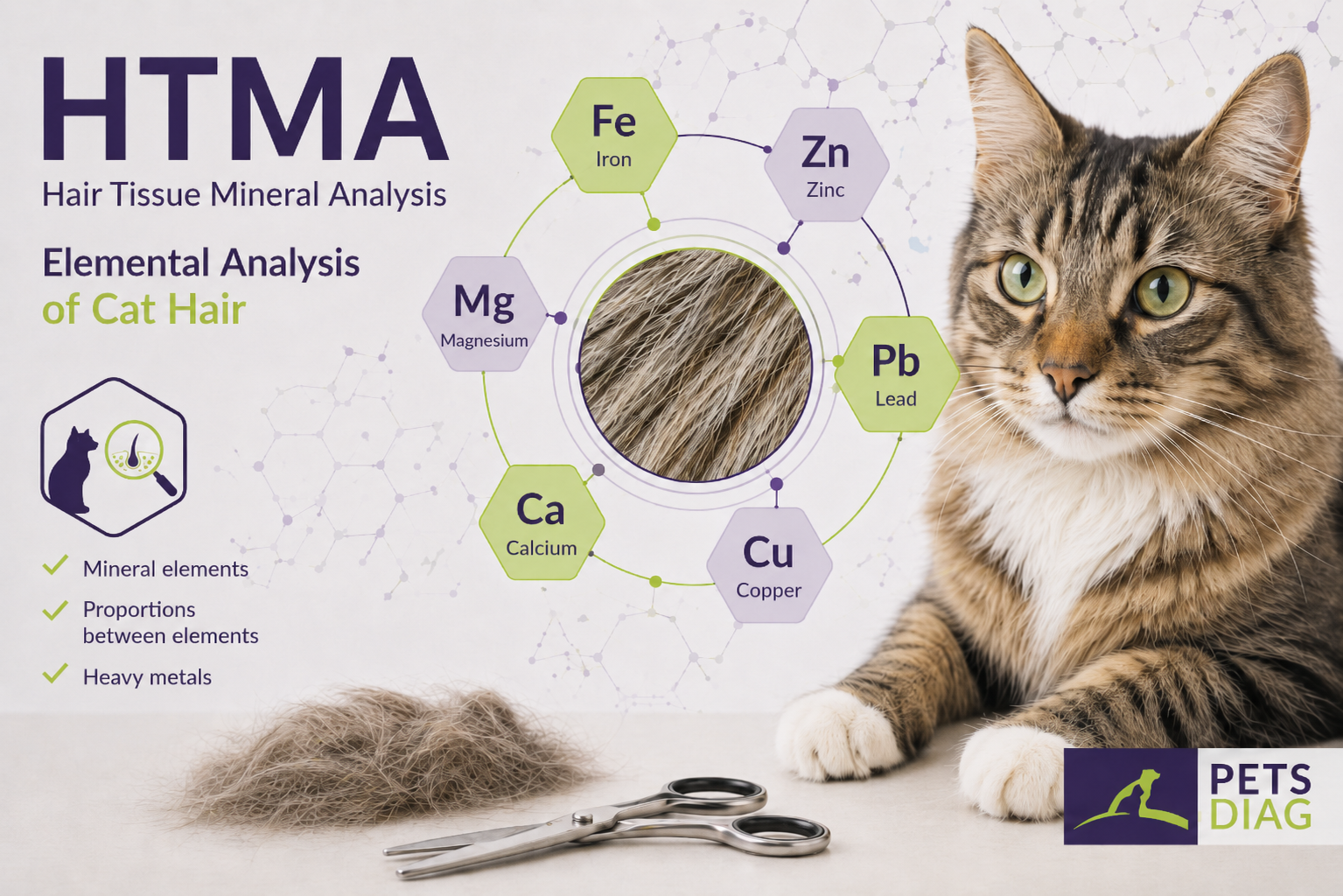
One of the laboratory methods used to assess element levels is cat hair analysis (HTMA – Hair Tissue Mineral Analysis). The test involves analyzing a hair sample for selected minerals and potentially toxic elements.
What exactly is this test, and what kind of information can it provide?
What Is Cat Hair Mineral Analysis?
Hair Tissue Mineral Analysis (HTMA) is a laboratory method used to determine the levels of selected elements in a cat’s hair sample.
The test allows for the assessment of:
✓ macro- and microelement levels
✓ relationships between elements
✓ the presence of selected heavy metals
The analysis is performed using the ICP-OES method (Inductively Coupled Plasma Optical Emission Spectrometry), commonly used for elemental analysis of biological materials.
Is Cat Hair Analysis Reliable?
Hair analysis is one of the methods used to assess the elemental composition of biological material.
A cat’s hair may reflect long-term exposure to selected elements, which is why HTMA is sometimes used in the context of:
✓ nutritional monitoring
✓ observing environmental influences
✓ changes related to diet and supplementation
In cats, factors associated with the home environment may also be considered, including exposure to dust, litter boxes, drinking water, or urban surroundings.
The results are informational in nature and should be interpreted with consideration of the cat’s diet and living conditions.
Hair Analysis and Cat Nutrition
Cats have specific nutritional requirements that may vary depending on:
✓ age
✓ activity level
✓ lifestyle and living environment
The type of diet may also play an important role, including wet food, dry food, BARF diets, or the use of dietary supplements.
Adequate intake of minerals and proper elemental balance are important aspects of daily nutrition.
Hair analysis may support a more informed approach to a cat’s diet and supplementation.
What Does an HTMA Report Include?
The cat hair analysis report includes:
✓ levels of selected mineral elements
✓ relationships between minerals
✓ information regarding the presence of heavy metals
✓ interpretation of the results in the context of the cat’s nutrition
Cat Hair Analysis vs Blood Tests
Hair analysis and blood tests provide different types of information.
✓ hair may reflect longer-term exposure to elements
✓ blood tests show current values at the time of sampling
These methods are not directly comparable and serve different informational purposes.
In practice, hair analysis may complement observations related to a cat’s nutrition and living environment.
When Should Cat Hair Analysis Be Considered?
HTMA analysis may be considered, among others:
✓ when changing the feeding approach
✓ for monitoring diet and supplementation
✓ in the context of the cat’s living environment
✓ as part of regular observation of the animal
✓ for both indoor and outdoor cats
✓ when using homemade or BARF diets
✓ in cases of increased environmental exposure in the home or the cat’s surroundings
✓ for breeding and show cats
How to Collect Hair for Analysis
The hair sample should be collected according to the instructions included in the kit.
1. The hair should be cut close to the skin
2. The sample should be collected from several areas
3. The material should be clean and dry
Important Information
Elemental hair analysis (HTMA) is intended for informational and educational purposes.
It is not a veterinary diagnostic test and is not used to diagnose diseases or make medical decisions. If you have concerns about your animal’s condition, consultation with a veterinarian is recommended.
Summary
Cat hair analysis (HTMA) is a laboratory method used to assess the elemental composition of a hair sample.
It may provide information about mineral levels, relationships between elements, and environmental exposure, supporting a more informed approach to nutrition, supplementation, and cat care.
FAQ
Is cat hair analysis safe?
Yes. The test involves collecting a small amount of hair.
Can HTMA analysis detect heavy metals in cats?
The analysis allows for the detection of selected elements, including heavy metals, in the hair sample.
How often can cat hair analysis be performed?
The test may be performed periodically, for example after a dietary change or to observe changes over time.
Does hair analysis replace veterinary examinations?
No. The results are informational in nature and do not replace veterinary consultation.
Can hair analysis support cat nutrition planning?
Yes. HTMA-EHAA analysis for cats may provide information that supports a more informed approach to nutrition and supplementation.
References
Scientific publications and studies
- Skoog, D.A., Holler, F.J., Crouch, S.R. – Principles of Instrumental Analysis, Cengage Learning
- Hou, X., Jones, B.T. – Inductively Coupled Plasma/Optical Emission Spectrometry, Encyclopedia of Analytical Chemistry
- Kempson, I.M., Lombi, E. – Hair analysis as a biomonitor for environmental exposure, Chemical Society Reviews
- Rodushkin, I., Axelsson, M.D. – Application of ICP techniques in biological material analysis, Science of the Total Environment
Technical materials and specialist publications
- MineralCo – Publications and technical resources on elemental analysis and ICP-OES
- Materials on elemental analysis of hair and biological samples available within MineralCo’s technological resources